
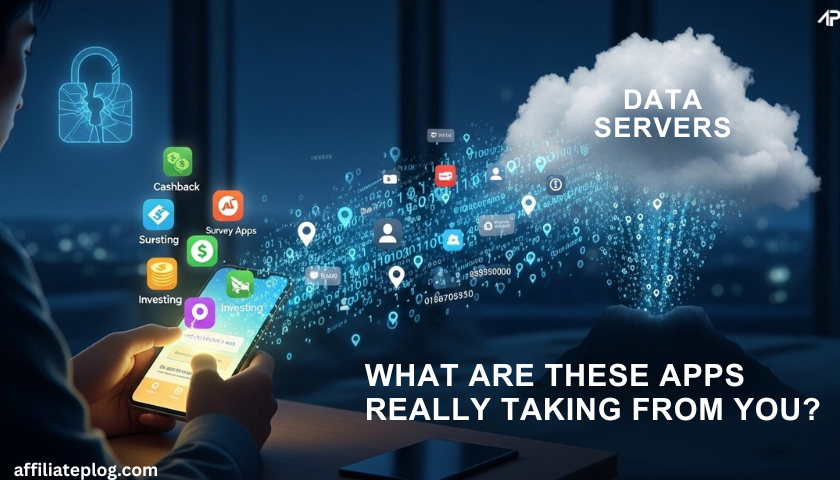
What Happens to Your Data When You Use Money-Making Apps: Unveiling the Privacy Trade-Off in 2026
Back in 2026, the digital economy is moving really fast, and money-making apps have become the go-to for millions who want to earn extra money through surveys, tasks, cashback rewards, and even bandwidth sharing.
These platforms—ranging from survey giants like Google Opinion Rewards to cashback services and reward programs—promise easy earnings with barely any effort.
However, behind the façade of quick payouts is a fundamental trade-off: your personal data.
With each offer you complete, receipt you upload, or internet usage you share, the vast data mining happens in parallel.
It is essential to get a grasp of what happens to your data in money-making apps, especially in times when privacy is the hottest topic in the news and regulations like GDPR and CCPA require transparency from data collectors.
This investigation into data privacy in earning apps in 2026 reveals the data-gathering methods, monetization ways, possible threats, and safeguards.
On the one hand, many apps are indeed legitimate businesses. On the other hand, their dependence on users’ data makes the relationship complex in terms of convenience and vulnerability.
Inveterate users of reward apps with privacy concerns get to make wiser choices with awareness, ensuring that the perks from sideline earnings don’t turn into a security fiasco in the long run.
The Data Collection Engine: What Money-making Apps Gather and Why

Money-making apps basically run on data as their main and most important asset.
First of all, through the mechanism of creating an account, users usually share with the app their email, contact number, age group, and bank account information for the purpose of conducting transactions.
The major benefit, however, comes from continuous use.
Survey applications record responses regarding products, lifestyles, and habits, thus forming the profiles of product preferences.
Cashback stores must let customers submit receipts or link accounts if they want to get a glimpse of shoppers’ habits, expenditures, and brands.
On-demand request platforms trace user behaviour through logging app installs, gameplays, or video views, which means getting device information and location data. Internet-sharing apps collect data for traffic routing purposes.
Such a gathering isn’t haphazard—it’s strategic. These money-making apps do it for clarifying their promotions, checking if users have done their jobs, and fighting fraud.
Most importantly, they use it for advertising targeting, which literally means that new surveys or deals are shown to you based on how you’ve acted before.
By 2026, with AI personalization being a norm, the data will be going deep into the machine learning models to increase user engagement and retention.
Monetization Beyond Rewards: Sharing and Selling Data
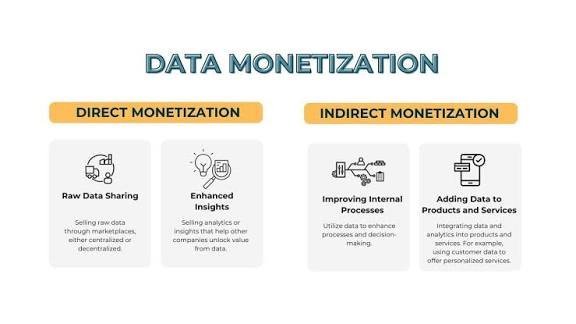
The phrase “if you’re not paying, you’re the product” perfectly fits the context here.
Whether free or low-threshold earning apps, they always have their ways to turn user data into money to compensate for the payouts.
They tie up with advertisers and market research firms to share anonymized data that they can’t trace back to the users, such as preferences among different groups, thus creating mutually beneficial relations.
The sale of aggregated datasets to third parties for analysis is a practice some companies employ to help their clients in realigning their business strategies.
For example, cashback apps verify purchases to the retailers and, at the same time, gain commissions—and often shopper profiles.
The direct sales may be a secondary or less obvious element; data is mainly anonymized at the time of distribution, but re-identification can occur if three or more data sources are combined.
The lengthy and not always read privacy policies reveal these activities through statements like data being used for “service improvement” or “partner collaborations.”
The linkage of loyalty programs in the reward environment leads to the merging and thus integration of earning data with shopping histories on a larger scale.
Some apps may be subscription-based and privacy-oriented, while most others are advertisement-supported, in which case, data is the main source of income besides rewards given to users.
Money-making Apps Risks and Realities: Profiling and Breaches
This data not only generates features but also creates a new attack surface to be exploited. One example could be targeted ads.
At first, they might come across as a bit “too accurate,” like when they guess a person’s health interest just out of a survey or from the products bought.
The risk of breaches, however, overshadows those of profiling even more.
Several well-known stories about hacked loyalty and reward programs are essentially cases of earning apps where the intruders had obtained and exposed personal data of the victims, such as email addresses, passwords, and even financial information.
The latter is especially tempting for cybercriminals to choose these types of accounts as their main targets to carry out account takeovers and impersonation, leading to the fraudulent use of points from some promos or selling them on the dark market, mainly to VIPs who prefer not to be known, such as celebrities or criminals.
Tracking without any incidence of a breach could still be a contradiction of anonymity.
Location extracted from tasks allows detailed maps of one’s whole daily routine. When different datasets are combined, they result in the creation of very complete figures, which, furthermore, are sold to brokers.
By 2026, with the development of profiling AIs, such data will be employed in virtually anything, from adjusting insurance premiums to hiring decision-making.
Regulations and User Rights: A Shifting Landscape
International initiatives have been created as shields. Consent and removal rights are the mandatory provisions under GDPR; with CCPA, consumers can refuse sales of their personal information.
Privacy labels that inform about data collection are a requirement by app stores.
Nevertheless, the point about enforcement is that it differs, and the very policies may be disguising the clause in the most dreadful language.
Consumers are granted the powers to check their personal information, request its erasure, or even put limitations on its use, yet these permissions, when exercised, still stem from minimizing one’s exposure.
Empowering Yourself: Money-making Apps Best Practices for Safer Earning
Enjoy your earnings and at the same time keep the risks at a minimum:
- Always meticulously read through the terms and conditions before registering, and choose those applications that clearly state that they will not sell your information.
- Isolate by making use of a secondary email or disposable cards.
- Scaffold your consent-sharing: for example, you decide not to give someone access to your contact list or exact location while allowing them to access your camera or microphone.
- 2FA should be turned on; also, keep an eye on your financial and personal accounts.
- Spread your utilization across different applications, so it will be more challenging for only one profile to represent you fully.
- When the choice is yours, go for the paid versions; thus, there will be less need for data to feed ads.
One example of a privacy tool is a privacy monitor, which could inform you about the number of trackers that are third parties, thus giving you a way to make a better decision.
Conclusion: Balancing Money-making Apps Earnings with Privacy in the Digital Hustle
In 2026, apps for making money will still remain highly convenient to use, whereby it is possible to earn real-life rewards for simple gesture-making.
Nevertheless, there is this underlying data economy, which signifies a clear compromise that, in fact, earnings come at a price, and that price is sharing personal data and, hence, insights mainly obtained, profiled, and sometimes resold to third parties.
Therefore, it is a matter of well-informed users who are tipped over to the ‘right’ side of things between privacy and taking advantage of the platforms.
Firstly, by grasping the most fundamental aspect of data in the apps used for money-making, i.e., that which feeds the ads or is likely to be forwarded to third parties, one reclaims the prerogative of decision-making on what is put out there or not.
Secondly, this era of data-responsible consumers is truly the era of rewarding smart hustlers: earning money is just part of the larger picture that also includes peace of mind.
Hence, always accompany 2026 with carefulness, strategic earning, and most importantly, empowered engagement as opposed to involuntary exposure.

Chimezie Duru is a Lagos-based Digital Entrepreneur, Wikipedia Editor & Biography Writer, Affiliate Marketing Strategist, IT Consultant, and Blogging Coach with over 6 years of experience building and monetizing blogs in Nigeria’s digital space. He is the founder of InkRise Academy (InkRise Digital Concepts) and creator of the Ink To Income Masterclass. A 9-module blogging course for aspiring Nigerian & African writers and bloggers covering SEO, content strategy, and monetisation.
As the creator of AffiliatePlog.com, Chimezie writes from real experience on Wikipedia editing & biography writing, affiliate marketing, online earnings, and digital tools for Nigerian freelancers and content creators. He also works as a freelance Business and Data Analyst, IT Consultant & System Administrator, bringing an analytical edge to every content and business decision.

One comment
Comments are closed.