
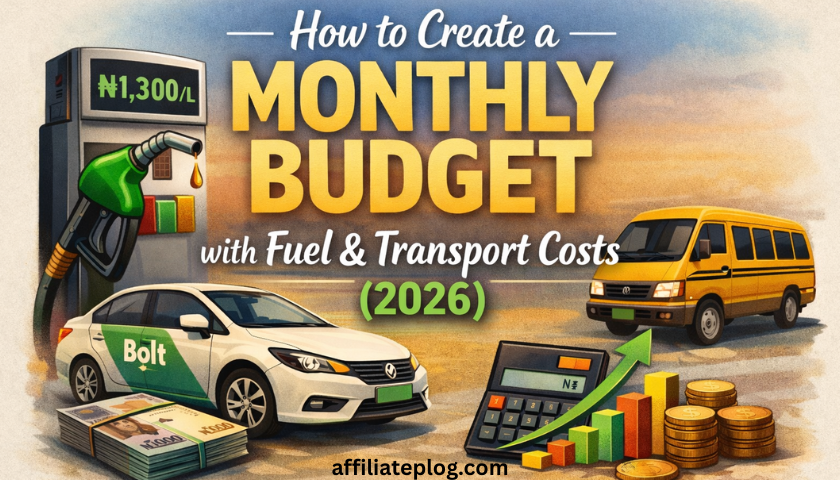
An effective monthly budget that thoughtfully incorporates fuel and transport costs is no longer a luxury but a necessity in 2026.
Creating a monthly budget with fuel and transport costs Nigeria 2026 is especially important now that fuel prices have reached a range of ₦1,200 to ₦1,400 per litre, and transport fares are still on the increase.
Many Nigerians who make a good income still find themselves broke at the end of the month. The reason is that these two categories quietly take up a large portion of their earnings.
Learning how to budget for fuel and transportation expenses in Nigeria can help you regain control of your finances.
A well-thought-out budget will allow you not only to pinpoint where your money is spent but also to limit unnecessary expenses and have some money left for savings or investments.
If you truly want a realistic monthly budget with fuel and transport costs Nigeria 2026, you must pay close attention to these hidden expenses.
Here is a simple and practical step-by-step guide to help you create a budget that realistically includes fuel/transport costs in your lifestyle.
We have kept it plain and simple so you can start applying it right away, especially if you’re learning how to budget for fuel and transportation expenses in Nigeria for the first time.
Step 1: Calculate Your Total Monthly Income
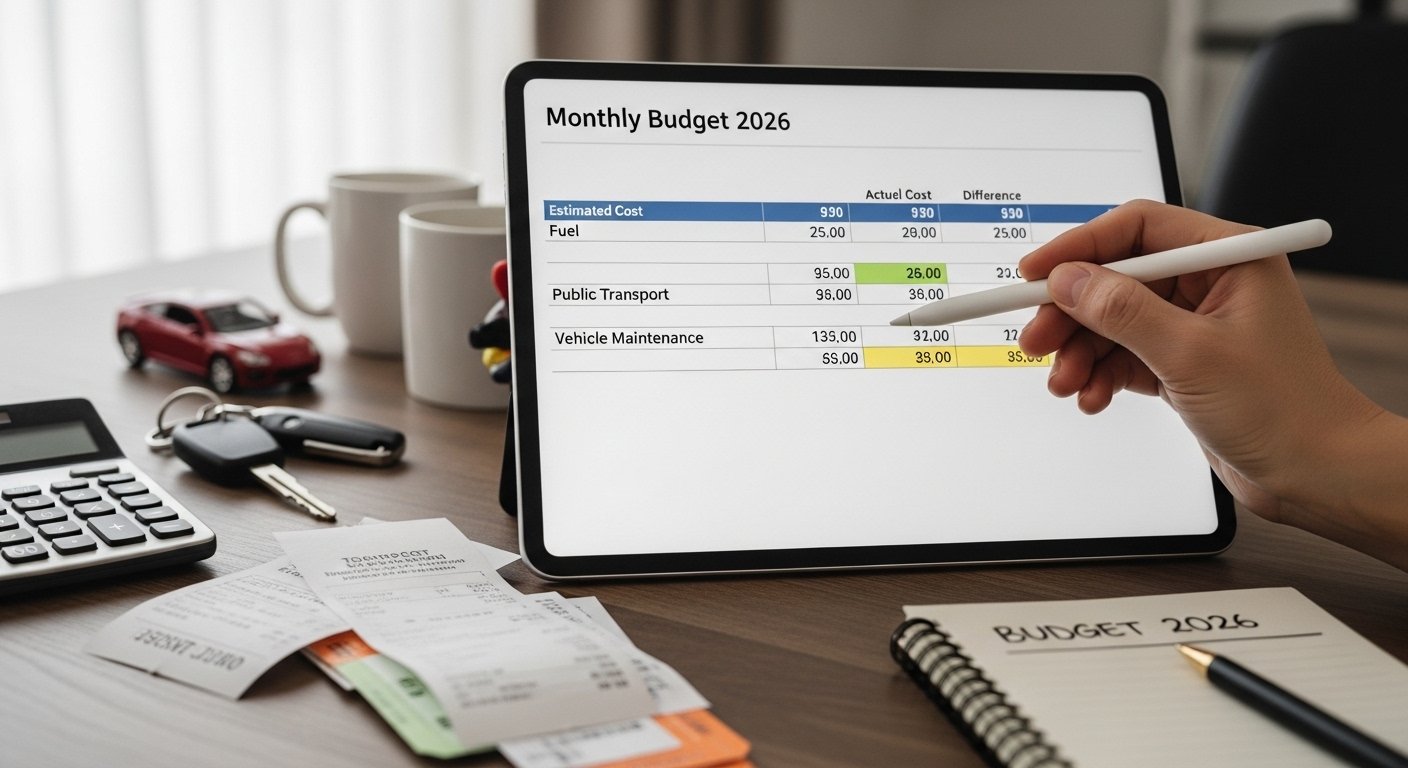
The first thing to do is to count all of your incoming money sources. These are:
Your salary or business profits
Side business incomes
Any remittances or investment incomes
Suppose you are paid ₦250,000 from your main job, and you make an extra ₦50,000 with a side hustle; then your total monthly income is ₦300,000.
If your income is unstable, then use a normal figure without any exaggeration. This is the foundation of building a monthly budget with fuel and transport costs Nigeria 2026.
Step 2: List and Categorise All Your Expenses
You should divide your expenditures into three main categories:
Fixed expenses (these remain more or less the same from month to month):
House rent or contributions
Electricity (NEPA) bill
Water bill
Internet or data subscription
School fees (if applicable)
Loan installments
Variable expenses (these depend on your lifestyle and can fluctuate):
Food and groceries
Eating out or small chops
Clothing and personal care items
Entertainment or leisure activities
Fuel and Transport (these are the two categories that most people underrate):
Petrol or diesel for your car or generator
Daily commute (bus, keke, okada, Bolt, or Uber)
Movement on weekends or with family
Occasional trips over long distances
Vehicle maintenance (tyres, servicing, insurance)
Understanding these categories is key when mastering how to budget for fuel and transportation expenses in Nigeria effectively.
For an individual living in a big city like Lagos or Abuja, a realistic monthly budget with fuel and transport costs Nigeria 2026 might look like the following example:
35–45 litres of petrol per month = ₦42,000 – ₦62,000
Daily commute = ₦800 – ₦1,500 per day × 20–22 working days = ₦16,000 – ₦33,000
Generator fuel and weekend movement = ₦10,000 – ₦20,000
One will be surprised to learn that most people, after properly tracking their fuel and transport, realize that this alone can be ₦50,000 – ₦100,000 or more on a monthly basis. This is why learning how to budget for fuel and transportation expenses in Nigeria is no longer optional.
READ ALSO: How to Generate Images with Gemini AI 2026 (Easy & Powerful Guide for Beginners)
Step 3: Add Everything Up and Compare to Income
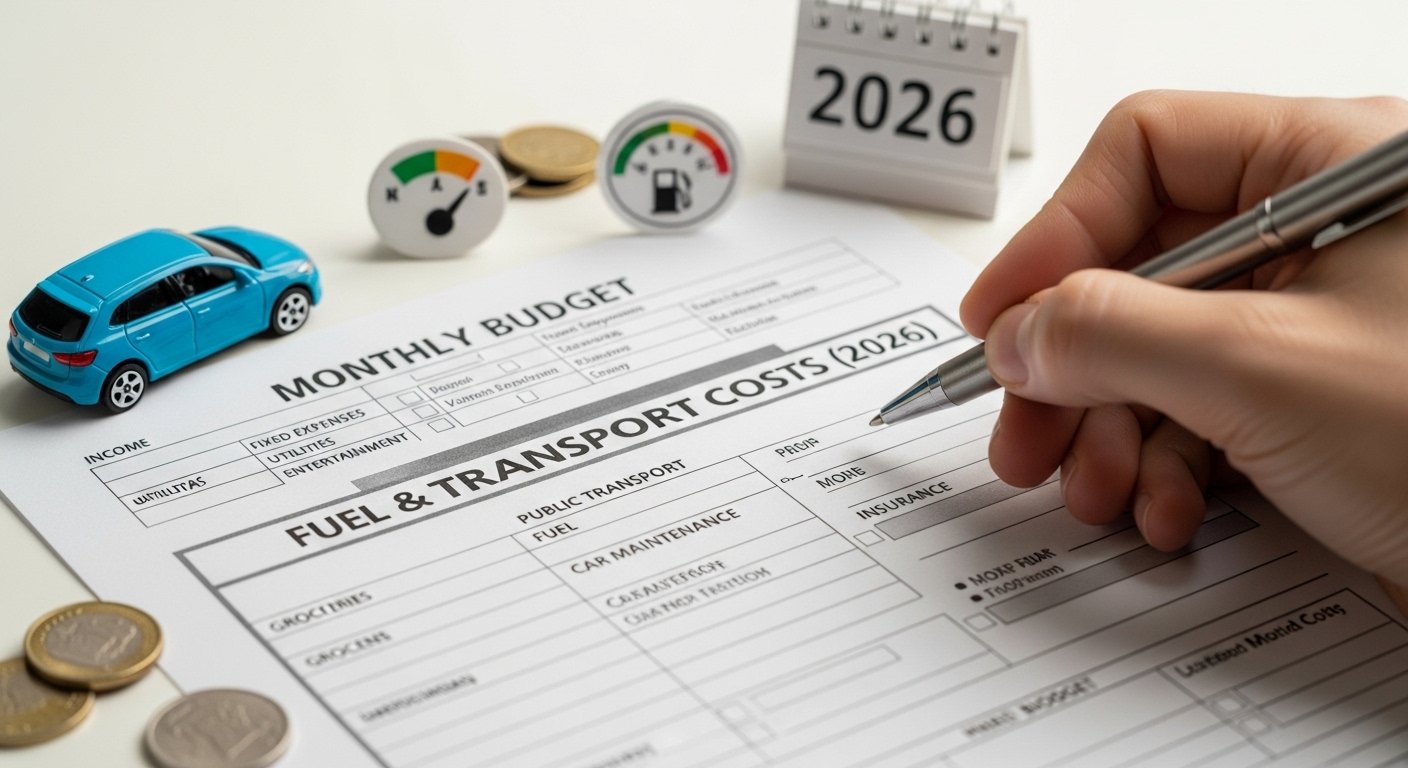
Now put together all your expenditures, including the fuel and transport amounts you have observed. See how your total compares with your income.
If your total spending is more than your earnings (a quite frequent scenario), it means you are at a loss. This is the time to reconsider your budget—the first and easiest way is to reduce your variable expenses and transport costs.
A proper monthly budget with fuel and transport costs Nigeria 2026 will help you quickly identify these gaps.
Generally speaking, a good budget division for most Nigerians is:
50–60% on needs (food, rent, fuel, transport, utilities)
20–30% on wants (dining out, entertainment)
10–20% on savings or debt repayment
This structure works well when practicing how to budget for fuel and transportation expenses in Nigeria realistically.
Step 4: Make Practical Adjustments to Fuel and Transport
Fuel and transport are probably the easiest categories to cut down on without making huge lifestyle changes. Here are some practical measures that can result in reductions of your costs:
Using public transport or carpooling to get to work
Going to fuel stations early in the morning when they are well-stocked to avoid black market prices
Keeping your vehicle in top condition (proper tyre pressure, consistent servicing) so that it consumes less fuel
Combining trips when you go out to minimize your movements
Evaluating and choosing solar or an inverter instead of relying on generator fuel
These smart decisions can significantly improve your monthly budget with fuel and transport costs in Nigeria 2026.
Even minor modifications, such as cutting down your daily ride-share use by two days each week, could result in savings of ₦10,000–₦15,000 every month.
Applying these tips consistently is part of mastering how to budget for fuel and transportation expenses in Nigeria without stress.
Step 5: Review and Adjust Every Month
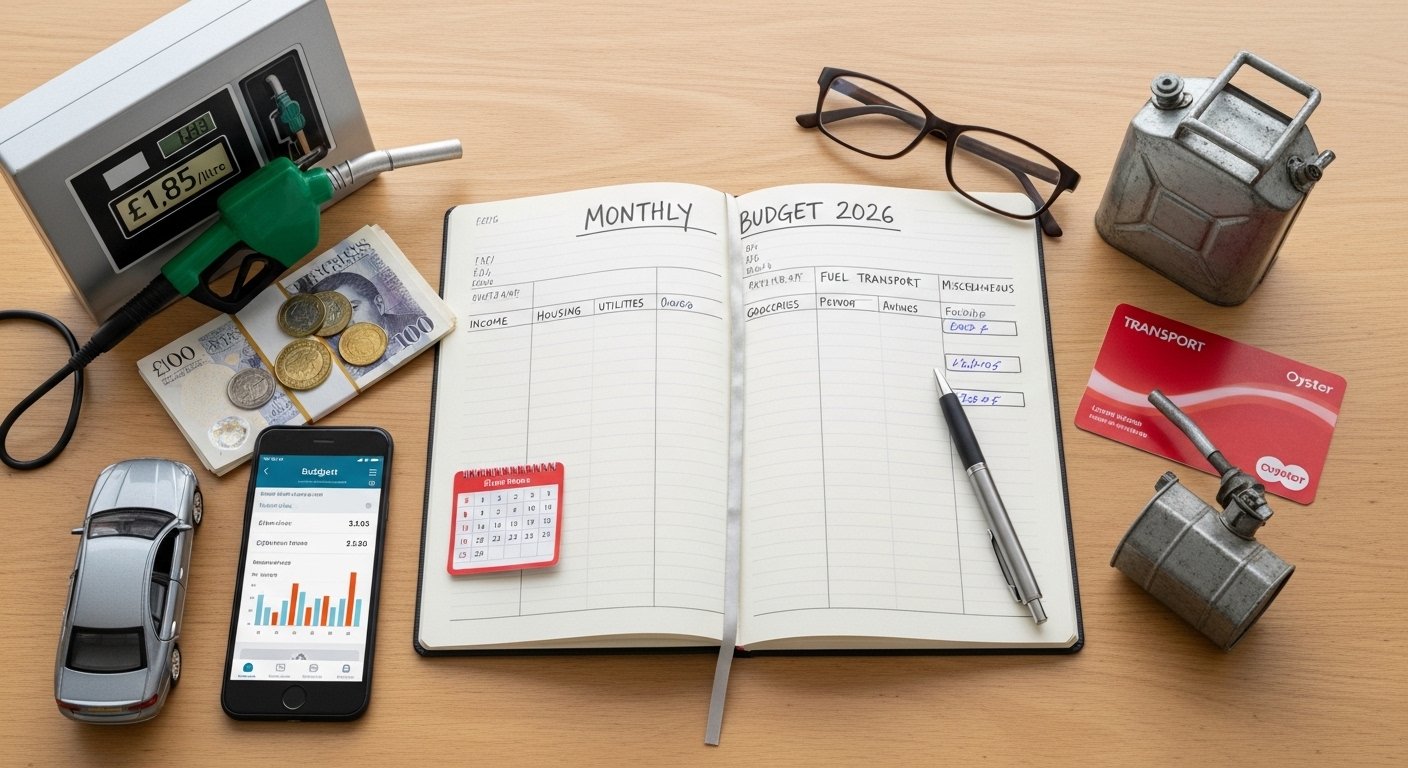
After each month, check what you really spent versus what you planned in your budget, especially focusing on fuel and transport. Usually, a lot of people are quite surprised when they do it for the first time.
Keep your daily spending records in a simple notebook, use your phone notes, or download a free budgeting app. This habit strengthens your monthly budget with fuel and transport costs Nigeria 2026 over time.
Once you spend a few months tracking, you will subconsciously alter your behavior to only spend where needed.
This is one of the most effective ways of learning how to budget for fuel and transportation expenses in Nigeria long-term.
Conclusion
Good budgeting has nothing to do with self-denial—it is about having power over your life and money.
By intentionally making fuel and transport your separate budgeting categories and tracking them, you stop them from silently eating up your finances.
Take it a step at a time: track your actual spending for only one month, draw up your very first monthly budget with fuel and transport costs Nigeria 2026, and make necessary adjustments.
If you stay consistent and continue learning how to budget for fuel and transportation expenses in Nigeria, you will gradually replace financial stress with confidence—month after month. You can do it.

Chimezie Duru is a Lagos-based Digital Entrepreneur, Wikipedia Editor & Biography Writer, Affiliate Marketing Strategist, IT Consultant, and Blogging Coach with over 6 years of experience building and monetizing blogs in Nigeria’s digital space. He is the founder of InkRise Academy (InkRise Digital Concepts) and creator of the Ink To Income Masterclass. A 9-module blogging course for aspiring Nigerian & African writers and bloggers covering SEO, content strategy, and monetisation.
As the creator of AffiliatePlog.com, Chimezie writes from real experience on Wikipedia editing & biography writing, affiliate marketing, online earnings, and digital tools for Nigerian freelancers and content creators. He also works as a freelance Business and Data Analyst, IT Consultant & System Administrator, bringing an analytical edge to every content and business decision.

One comment
Comments are closed.