
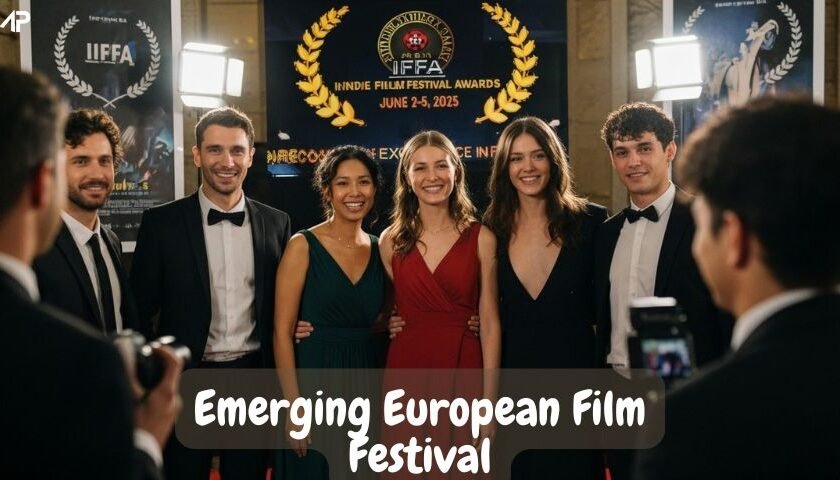
How European Film Festivals Are Launching the Next Generation of Filmmakers.
In the heart of Europe’s cultural landscape, film festivals aren’t just glamorous red-carpet affairs; they’re vibrant incubators where fresh voices challenge conventions and rewrite narratives.
From the misty fjords of Scandinavia to the sun-drenched Riviera, these gatherings are democratizing cinema, giving first-time directors and bold shorts a shot at global eyes.
Read about celebrities’ biographies and all you need to know about your favorite celebrity. Right HERE.
From Red Carpets to New Voices: Why EU Film Festivals Matter in 2025

At the forefront stands the European Film Festival (EUFF), a sprawling initiative backed by the European Commission that’s more nomadic than a fixed venue.
Launched in 1985 and now spanning over 100 EU delegations worldwide, the 2025 edition runs through December, with in-person screenings kicking off in November across cities like Toronto, Ottawa, and Vancouver—though its European roots keep it firmly tied to the continent.
7 What makes EUFF a beacon for newcomers? It’s laser-focused on shorts and features from all 27 EU member states, prioritizing “emerging filmmaking talents” alongside established names.
Picture this: a young Romanian animator’s quirky documentary on urban folklore unspools in a Brussels arthouse, followed by a Q&A where producers from Berlin scout the room.
The festival’s traveling format, popping up in villages, open-air summer nights, and urban multiplexes, creates grassroots buzz, turning obscure debuts into festival darlings.
In 2025, expect themes like “Solidarity, Equality, Sustainability” to weave through selections, as seen in the South African outpost’s lineup of 10 character-driven tales from unusual corners of Europe. For aspiring directors, submitting via platforms like FilmFreeway is straightforward, with free entry for many categories, ensuring low barriers for high dreams.
Berlinale Talents: Europe’s Pressure Cooker for Emerging Voices

Not far behind in prestige is the Berlinale, Berlin’s February juggernaut, which wrapped its 2025 edition earlier this year but leaves a lingering echo for up-and-comers.
With over 400 films and a theme of “Listen Courageously: Cinematic Narratives in Times of Dissonance,” it welcomed 201 fellows to its Talents program—a six-day whirlwind of workshops, pitches, and panels.
Here, emerging voices from Eastern Europe rub shoulders with global scouts; think a Slovakian VR short on climate refugees getting fast-tracked to co-production deals. The festival’s Forum and Generation sections are goldmines for debuts, often leading to Eurimages funding or streaming pickups.
One 2025 highlight? The Talents Footprints initiative, where Mastercard-backed projects by underrepresented creators, like a non-binary German director’s immersive doc, pitch to A-listers.
As one alum noted in a Variety piece, “Berlinale isn’t just a festival; it’s a pressure cooker for ideas that might otherwise stay shelved.” 50 For 2026 hopefuls, applications open soon—mark your calendars.
Shifting east, the Karlovy Vary International Film Festival (KVIFF) in the Czech Republic reigns as Central Europe’s crown jewel, running June 27 to July 6 in 2025. Nestled in spa-town elegance, it drew 331 project submissions for its Gap-Financing Market alone, selecting 54 for pitches that netted millions in deals.
But the real magic? EFP’s Future Frames: Generation NEXT, which handpicked ten film-school grads, like a Latvian director’s poignant take on post-Soviet identity, for masterclasses and red-carpet spotlights.
“It’s a steadfast springboard,” says the program’s coordinator, emphasizing how these spotlights lead to festival circuits and sales agents. 21 KVIFF’s East of the West sidebar is tailor-made for regional debuts, often unearthing talents who later storm Cannes.
Recent X chatter from attendees raved about a Hungarian short on migrant dreams clinching the Crystal Globe, proving the festival’s knack for prophetic picks.
For indie rebels, the ÉCU – The European Independent Film Festival in Paris (May 2025) is unapologetically alternative. Celebrating its 20th year, it screened over 100 shorts and features from 40 countries, with categories for experimental works and music videos. 10 ÉCU’s ethos? “No barriers, just bold visions.”

Emerging filmmakers flock here for the low submission fees (€50-€100) and after-parties where agents mingle. A 2025 standout: a Dutch collective’s AI-infused thriller that snagged the Best European Short, sparking debates on tech’s role in storytelling. 37 It’s the anti-Cannes, gritty, inclusive, and fiercely pro-underdog.
Then there’s the EU Short Film Festival (EUSFF), a nimble May event in Ottawa with European echoes, featuring three programs from 23 member states. Free to attend, it spotlights “veteran and emerging alike,” with 2025’s kaleidoscope including animations from Greece and docs from Poland.
4 Back home, the Short Film Network by the European Film Academy links 30 festivals across 24 countries, nominating one short per event for the annual European Film Awards— a pipeline that’s launched careers since 1998.
Beyond the festivals, discovery in 2025 is evolving. Regional funds like CineRegio backed 53 Cannes selections, funneling € millions into debuts and co-productions. Spain’s ICAA agency, via its €1.7 billion Audiovisual Plan.
Shortened the gender gap by prioritizing female-led projects, birthing hits like those from Mod Producciones. Platforms like e-TALENTA and Filmmakers.eu connect 70,000 actors and 5,000 directors continent-wide, with self-tape auditions and live casts, democratizing access.
The LUX Audience Award’s Young Talent Programme whisks one pro per EU country to Strasbourg for training and premieres, fostering cross-border networks. 22 And let’s not forget film schools: Top spots like Germany’s Filmakademie Baden-Württemberg or France’s La Fémis churn out grads who dominate Future Frames.
Social media amplifies it all. On X, threads from Espoo Ciné’s 36th edition (August 2025) hailed Finnish premieres of emerging European gems, with users sharing clips of a Swedish director’s climate fable. Posts from Karlovy Vary buzzed about “young European filmmakers shining,” tagging debuts that went viral.
Yet, challenges lurk. Post-pandemic, European cinemas stabilized in 2024 with a third of admissions for local films, but 2025’s box office wobbles under streaming dominance. 25 AI ethics panels at Venice’s Production Bridge (August-September 2025) debated its double-edged sword for creators.
Finale
European film festivals in 2025 aren’t mere showcases; they’re revolutions in motion, flinging open doors for talents once sidelined by gatekeepers.
From EUFF’s wandering spirit to Berlinale’s bold dialogues and KVIFF’s eastern pulse, these events, bolstered by funds, platforms, and schools, are unearthing stories that pulse with Europe’s soul: resilient, diverse, unflinching.
As a young Polish director might whisper after her Torino premiere, “One reel can ripple across oceans.” For filmmakers, the call is clear—submit, show up, connect.

Chimezie Duru is a Lagos-based Digital Entrepreneur, Wikipedia Editor & Biography Writer, Affiliate Marketing Strategist, IT Consultant, and Blogging Coach with over 6 years of experience building and monetizing blogs in Nigeria’s digital space. He is the founder of InkRise Academy (InkRise Digital Concepts) and creator of the Ink To Income Masterclass. A 9-module blogging course for aspiring Nigerian & African writers and bloggers covering SEO, content strategy, and monetisation.
As the creator of AffiliatePlog.com, Chimezie writes from real experience on Wikipedia editing & biography writing, affiliate marketing, online earnings, and digital tools for Nigerian freelancers and content creators. He also works as a freelance Business and Data Analyst, IT Consultant & System Administrator, bringing an analytical edge to every content and business decision.