

Are You Good at Taking Pictures? Discover How to Earn From Stock Photography and Videos in 2026
The next year looks good for the stock media industry, with the worldwide market for stock photos and videos expected to be between 5.5 and 6 billion dollars, up from 5.28 billion dollars in 2023. The increase is driven by a stable CAGR of 7-8%.
To meet their marketing and advertising needs, businesses, marketers, and creators are constantly seeking top-notch visuals, which they then disseminate via social media, ads, and websites. Therefore, photographers and videographers can now easily make a fortune.
However, due to the fact that there is a massive amount of AI-generated content available, if you want to be noticeable, you have to be very careful with your strategy. For example, think about producing authentic, diverse content since it is very likely that at this moment, there are no machines that could replicate it yet.
If done right, the business of stock photography and videos can bring you a steady income in the background of your everyday life, no matter whether you are a hobbyist with just a smartphone or a professional drone operator.
Beginners can make a few hundred bucks a month, while top contributors can earn six figures. This guide explores the how-to and the earning potential of stock photography and videos, the best platforms to use, and the tips to be future-proof in 2026.
Understanding Stock Photography and Videos: The Basics
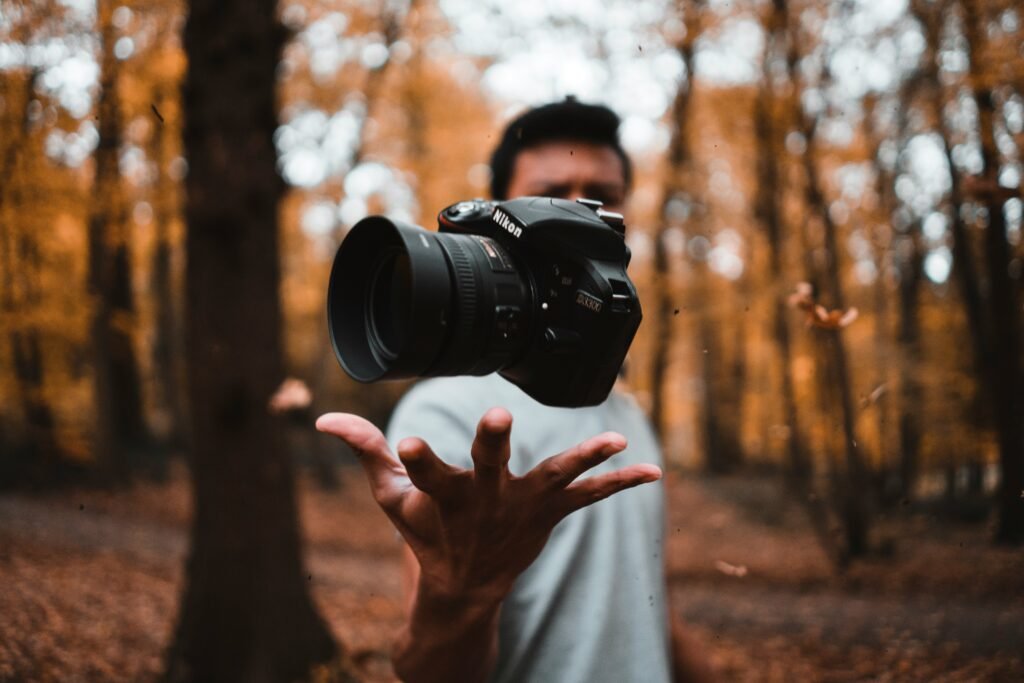
Stock photography and videos are images and videos that have been previously captured and are made available to anyone who wants to use them for business or publication purposes by buying a license.
Buyers- the likes of ad agencies, bloggers, or e-learning platforms- pay a one-time fee for the usage rights of your work, and you receive royalties every time your work is downloaded.
There are mainly two types of licenses: royalty-free (RF), which gives the user the right to reuse broadly for a set fee, and rights-managed (RM), which is a more limited and expensive option but gives a higher profit per sale.
By 2026, the video side of things is going to be a lot more dynamic than the photographic one, as stock video demand will increase at an 8.7% CAGR due to the short-form content trend on TikTok and Reels.
Despite that, photos will still be the leading source of stock media (accounting for approximately 65-70% of the market), while videos showing day-to-day life, business, or nature can be priced at 20-50% higher per download.
The money comes from the commissions (15-75% per sale), and the good news is that the work can be done in your spare time: upload once, get paid multiple times. To be honest with you, most people who participate in stock media don’t get rich in a day. Most of them need around 1,000-5,000 assets in their portfolio to be able to make a good and steady $500-$2,000/month, but with regular uploads, it is doable.
Step-by-Step: How to Earn from Stock Photography in 2026
Stock media is low-entry: no need for a fancy degree, just a camera (even your phone will do for beginners) and internet access. Here is your plan for stock photography online selling for profit:
-
Build Your Skills and Gear to Earn from Stock Photography
You can start with the gear you have at hand: a smartphone nowadays is the tool to capture 92% of photos worldwide, and apps, for instance, Lightroom Mobile, can bring the photo editing to a professional level. Make your buying decisions carefully-a DSLR/mirrorless camera, a tripod, and basic lenses can cost you between $500 and $1,000.
A gimbal (around $100-$300) can help stabilize your video shots. Concentrate on the aspects that are in demand: real and diverse (real people, different cultures), drone aerials (market growing at 18.7% CAGR), and short-form vertical videos.
Make your shots with the RAW format if you want to edit them later without losing quality, and at the same time, get familiar with the rules of composition, like leading lines or the rule of thirds, to determine which art you want to use.
2. Create Marketable Content to Earn from Stock Photography
Research is the main selling point: Start using Google Trends or agency search bars to check the latest trending keywords like “remote work diversity” or “sustainable living clips”. The best practice is to go for evergreen (business shots that don’t get old), combined with seasonal (holidays, events).
Nature or city, 10-30 second loops are what will sell your video the most. It is highly recommended to get a model/property release signed from the people/places you have shot, since it is a must for commercial use.
Batch shoot: Why not use the whole weekend for a themed shoot like eco-friendly home offices? This way, you will quickly increase your volume.
-
Edit and Optimize for Sales
To make a final product of the highest quality is half the work. Color can be enhanced, distractions removed, and technical issues like noise can be taken care of through free software like GIMP or a paid one like Photoshop. One asset must have 25-50 descriptive tags (e.g., “diverse team brainstorming meeting video 4K”) to be keyworded like a pro.
Buyer-pleasing descriptions should be like: “Energetic young professionals collaborating in a modern office, slow-motion.” It is possible that Xpiks or keyword research apps can automate this task, thus freeing a few hours.
-
Choose Platforms and Upload Strategically to Earn from Stock Photography

To have a diverse portfolio to earn from stock photography, a non-exclusive photographer should sign up with 5-10 agencies, meaning that a single photo can bring revenue from multiple sites. First-rate options for 2026:
- Shutterstock: Large quantity; 15–40% royalties ($0.25–$2 per photo, $5–$20 videos). Suitable for newbies; monthly PayPal payments are done.
- Adobe Stock: Direct Lightroom connection; 33% on photos, 35% videos ($0.33–$3+). High acceptance rate, good for creative pros.
- Getty Images/iStock: Luxury; 15–45% ($10–$500+ per extended license). Mostly editorial, but tough to break—perfect for unique travel or news shots.
- Alamy: Conventional RM style; 40–50% ($20–$200/sale). Ideal for editorial, with little competition.
- Pond5: Mostly videos; 30–50% ($5–$100/clip). Referral bonuses increase income.
What about opening one account at Microstock? Plus and uploading (without any charges and with full control) one photo to many agencies? At the beginning, your goal should be to upload 50–100 times per month.
-
Track, Promote, and Scale to Earn from Stock Photography
Keep an eye on information panels to find out what works – invest more time and resources in those that bring you the highest profit. Utilize the potential of social media for promotion: Post what you are doing with your project on Instagram Stories to attract people.
Take part in the communities, e.g., Reddit’s r/stockphotography, to get tips. You may be able to afford the rise in your business by employing models or using scholarships for camera equipment. Instead of worrying about taxes, you should be keeping a record of your income since most of the platforms will be sending you a 1099 form.
Realistic Way to Earn from Stock Photography: What to Expect in 2026
Without glamorizing the situation, Stock media is a tough field, with AI making things less clear, but those who are committed usually succeed. The monthly average income per image is from $0.02 to $0.25 for photos, and a bit higher, between $0.50 and $5, for videos. The extended licenses of a single viral shot may bring $100–$700 to its owner.
- Beginners (100–500 assets): $50–$300/month. The main goal should be to create a strong portfolio.
- Mid-tier (1K–5K assets): $500–$2,500/month. The main point of success is regular uploads.
- Pros (10K+ assets): $5K–$20K+/month. The highest earners make up to $28K/year with 2K quality images. One stock photographer shared that he made $2,986 in a powerful month across various agencies.
To a great extent, those who do stock full-time are on average blending with freelance work and earning $41K–$66K/year, which is quite a comfortable amount. Most of thetimee the video works just as a multiplier where photo earnings are doubled due to demand.
2026 Trends: AI, Authenticity, and Opportunities to Earn from Stock Photography
AI is the elephant—generative tools create “slop” fast, but buyers crave human authenticity: emotional depth, cultural nuance, real moments. AI fakes poorly. Trend: Hybrid workflows—use AI for editing/ideas, but shoot originals.
Drone and mobile footage surges (18.7% CAGR), while diverse, inclusive content (e.g., global cultures) dominates. Short videos for social (Reels/TikTok) and AR/VR assets emerge. Platforms integrate AI search, so optimize for it. Upside: AI boosts demand for training data—your unique shots become valuable datasets.
Conclusion: You Can Earn from Stock Photography in 2026
Creating stock images and videos as a source of income in 2026 can be your side hustle or full-time career, which is cleverly scalable and blends your creative power with passive income in a $6B+ market.
Begin with a small step: Prepare your equipment, film trending topics like diverse videos, and upload them to Shutterstock/Adobe, and then, sales-based iterations. Realistically, you can make $500+/month with a 4 to 6 months’ grind, and then scale to $5K+ as your portfolio expands. Fight AI by being a human; authentic stories always win.
Get started now: Study the keywords, prepare your first 50 uploads in a batch, and then watch the royalties coming in. Whether you are selling stock footage or photos, 2026 will be the year of the creator who is persistent. Take your camera, your next bestseller is waiting for you. Follow our guide and be on the way to earn from stock photography in 2026.

Chimezie Duru is a Lagos-based Digital Entrepreneur, Wikipedia Editor & Biography Writer, Affiliate Marketing Strategist, IT Consultant, and Blogging Coach with over 6 years of experience building and monetizing blogs in Nigeria’s digital space. He is the founder of InkRise Academy (InkRise Digital Concepts) and creator of the Ink To Income Masterclass. A 9-module blogging course for aspiring Nigerian & African writers and bloggers covering SEO, content strategy, and monetisation.
As the creator of AffiliatePlog.com, Chimezie writes from real experience on Wikipedia editing & biography writing, affiliate marketing, online earnings, and digital tools for Nigerian freelancers and content creators. He also works as a freelance Business and Data Analyst, IT Consultant & System Administrator, bringing an analytical edge to every content and business decision.