

Living Paycheck to Paycheck Ends Here After Reading This.
If you are living paycheck to paycheck, you already know how the month goes. Payday arrives, bills take their turn, and by the second week you check your balance before you buy anything. It is stressful, tiring, and can make you feel like you are the only one stuck in the loop.
You are not. Millions of people around the world live this way, and the good news is that it does not have to stay this way. In this guide, I will show you three simple income streams you can build on the side, step by step, without a big budget or a special background.
I will also be honest with you from the start. None of these streams will make you rich next month. They start small, and they take patience. But built one at a time, they can give you something better than a bigger paycheck: a cushion.
Why One Income Is No Longer Enough

Living paycheck to paycheck is rarely about laziness or bad math. In most cases, prices keep climbing while income stays the same. Rent, food, transport, and bills all grow, but your salary does not grow at the same speed.
When you depend on one source of money, you have one point of failure. A delayed salary, a cut in working hours, or a surprise repair bill can knock your whole month off balance. A second and third income stream do more than add cash. They add safety. If one slows down, the others keep you steady.
That is the idea behind this guide. You are not trying to quit your job. You are trying to make sure one problem cannot shake your whole life.
Before You Start: Three Ground Rules
Ground rules keep you from burning out in week two.
- Start with one stream, not three. Get your first result before you add the next. Trying everything at once is the quickest way to quit.
- Protect a few hours every week. Five to eight hours is enough. Put them in your calendar like a real appointment.
- Keep your side income separate. Use a different bank or wallet account so the money does not melt into daily spending. Also check the tax rules in your country, since side income is often taxable.
Anyone living paycheck to paycheck does not have much room for mistakes, so these small habits matter more than any fancy tool.
Stream 1: Freelancing, the Fastest Way to First Income

Freelancing means selling a skill directly to people or businesses who need it. Popular options include writing, graphic design, video editing, social media management, virtual assistance, bookkeeping, and translation. You do not need a degree. You need a skill that solves a problem and a few samples that prove you can do it.
Here is a simple way to begin:
- Pick a skill you already have, or can learn in about 30 days. Choose something people clearly pay for.
- Create two or three sample pieces. A sample logo, a short article, or a two-minute edited video works well.
- Build a simple profile. Use a platform like Upwork or Fiverr, or a clean LinkedIn page. Say who you help and how.
- Pitch every day. Send five to ten short, friendly messages to people who could use your work. Most will not reply. That is normal.
- Start with fair prices, not rock-bottom ones. Very low prices attract difficult clients. Raise your rates as reviews come in.
Freelancing is the quickest of the three streams because payment can arrive within weeks. For someone living paycheck to paycheck, that speed is exactly what is needed first. Use your early earnings to support the other two streams.
A word of caution: platforms take a fee, competition is real, and your first client may take a few weeks. Also, never pay anyone to “give you a job.” Real clients pay you, not the other way around.
Stream 2: Affiliate Marketing, the Slow Builder
Affiliate marketing means recommending a product and earning a small commission when someone buys through your special link. You need a place to share your recommendations, such as a blog, an email list, a social page, or a YouTube channel.
People who earn from it usually do a few things right:
- They recommend what they actually use. Trust is your real product. If you would not tell a close friend to buy it, do not promote it.
- They answer real questions. Helpful comparisons, step-by-step guides, and honest reviews attract readers who are already close to buying.
- They join programs carefully. Many are free to join, but each has its own rules. Check that the program accepts your country and pays in a way that works for you.
- They tell people about the link. In many countries, you must clearly say that you may earn a commission. It is the honest thing to do, and it builds trust.
Some programs pay recurring commissions, which means you earn every month while the customer stays subscribed. That is the closest thing to money that quietly pays you back.
But be realistic. It usually takes months of publishing before the first commission arrives, and some people earn nothing because they stop too early.
Think of it like planting a tree. Nothing shows for a while, and then one season the fruit begins to come.
Stream 3: Faceless YouTube Content
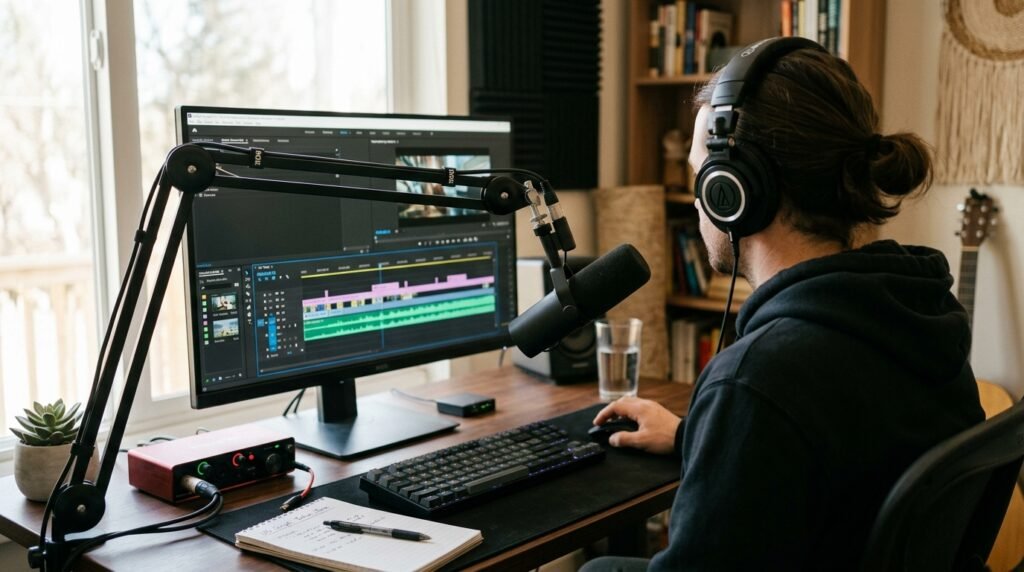
“Faceless” means you never appear on camera. You can use your voice with screen recordings, stock footage, slides, simple animation, or text on screen. Popular topics include money tips, tech tutorials, product explainers, history, and storytelling.
Here is how to start:
- Choose a niche you can make at least 30 videos about. If you run out of ideas after five, pick something wider.
- Search YouTube for what people already ask. Type your topic into the search bar and note the suggestions that appear.
- Write a short script. Speak the way you talk to a friend.
- Record clear audio. A decent phone microphone in a quiet room beats fancy video with bad sound.
- Use a free editor to put it together. Add a clear title and a simple thumbnail.
- Upload on a steady schedule. Consistency matters more than perfection.
You can earn from a channel in several ways: ads through the YouTube Partner Program (YPP), affiliate links in your video descriptions, sponsorships, and your own digital products.
Now for the part many articles skip. As of 2026, the YouTube Partner Program asks for 1,000 subscribers plus either 4,000 public watch hours in the last 12 months or 10 million Shorts views in 90 days before ad revenue begins.
There is also an earlier level at 500 subscribers, but it unlocks features like channel memberships and Super Chat, not ad money. YouTube has also announced that from February 1, 2027, new applicants will need 8,000 watch hours or 20 million Shorts views. Rules can change, so always confirm on YouTube Help before you plan around any number.
YouTube is also strict about low-effort, copied, or mass-produced videos. Add your own voice, your own ideas, and real value. This is the slowest of the three streams, and many channels never reach the requirements. But it pairs well with affiliate marketing, since your video descriptions can hold your links.
How the Three Streams Work Together
Think of your streams as a team with different jobs.
- Freelancing pays you now. It covers bills while the others grow.
- Affiliate marketing pays you later. It builds slowly, then keeps paying.
- YouTube brings the audience. Videos send viewers to your affiliate links, and skills like scriptwriting and editing can also become freelance services.
Each stream feeds the others. Freelance work sharpens the skills that make your videos better; your videos bring in viewers; and your affiliate links turn some of that attention into income. That is how living paycheck to paycheck slowly turns into having options.
A Simple 90-Day Starter Plan

These are goals, not guarantees. Adjust them to fit your life.
- Days 1 to 30: Choose your freelance skill, build two or three samples, set up your profile, and send your first pitches.
- Days 31 to 60: Keep pitching. Pick your YouTube niche and publish your first four to six videos. Research one or two affiliate programs that match your topic.
- Days 61 to 90: Add honest affiliate links where they fit. Look at which videos got the most views and make more like them. Raise your freelance prices if clients are happy.
After 90 days, you will not be finished, but you will have three moving parts. That is a strong start for anyone tired of living paycheck to paycheck.
Five Mistakes That Keep People Stuck
- Starting all three streams at once. You will end up doing all of them badly.
- Quitting after 30 days. Affiliate marketing and YouTube reward the people who stay.
- Buying expensive courses before earning a single dollar. Start free. Pay for training only when you have income and a clear need.
- Promoting products only for the commission. It destroys trust quickly.
- Letting extra income disappear into spending. Living paycheck to paycheck often continues because extra money slowly turns into higher spending. Give every new dollar a job: a small emergency fund first, then debt, then growth.
This article is for general education only. It is not financial or tax advice, so speak with a qualified professional about your own situation.
Frequently Asked Questions (FAQ)
Can side income really help me stop living paycheck to paycheck? It can help, but only with steady effort and good money habits. Extra income means little if your spending rises to match it. Build the cushion first.
How long before I see money? Freelancing can pay within a few weeks to a few months. Affiliate marketing and YouTube often take several months or longer, and there are no guarantees.
Do I need money to start? Very little. A phone or laptop, an internet connection, and free tools are enough for the first stage.
Do I have to show my face on YouTube? No. Many channels use voiceovers, screen recordings, or animation. Just make sure your content is original and follows YouTube’s rules.
Is affiliate marketing free to join? Most programs are free, but some limit which countries they accept. Read the terms before you sign up.
Which stream should I start with? For most people, freelancing, because it can pay the fastest.
Can I do this with a full-time job? Yes, with five to eight hours a week. Check your employer’s rules on side work first.
Conclusion
Living paycheck to paycheck is a hard place to be, but it is not a life sentence. Freelancing gives you cash sooner, affiliate marketing builds slow and steady income, and a faceless YouTube channel grows an audience that supports both.
None of them is magic, and none of them is instant. Together, though, they can give you a second and third source of money that keeps showing up when one slows down.
So pick one stream, take one small step this week, and stay consistent for the next 90 days. If you are tired of living paycheck to paycheck, the best time to plant that first tree was a while ago. The second best time is today.

Chimezie Duru is a Lagos-based Digital Entrepreneur, Wikipedia Editor & Biography Writer, Affiliate Marketing Strategist, IT Consultant, and Blogging Coach with over 6 years of experience building and monetizing blogs in Nigeria’s digital space. He is the founder of InkRise Academy (InkRise Digital Concepts) and creator of the Ink To Income Masterclass. A 9-module blogging course for aspiring Nigerian & African writers and bloggers covering SEO, content strategy, and monetisation.
As the creator of AffiliatePlog.com, Chimezie writes from real experience on Wikipedia editing & biography writing, affiliate marketing, online earnings, and digital tools for Nigerian freelancers and content creators. He also works as a freelance Business and Data Analyst, IT Consultant & System Administrator, bringing an analytical edge to every content and business decision.